
Think of trading like a college grading system. You don’t need to score 100% to pass. In many British-style grading systems, 70% and above is considered excellent, while 50–59% is considered average but still a pass. The same logic applies to trading, you don’t need a perfect strategy to make money from it.
However, most traders still make the mistake of chasing either a one-time big win or a perfect trading system which in reality does not exist.
If we tell you that you can be profitable with a win rate as low as 40%, what would be your reaction? That means you only need to win 4 of 10 trades and 40 of 100 trades. The key lies in using a 1:3 Risk-Reward Ratio strategy with a proven risk management approach.
By risking a small amount relative to your potential reward, even a modest win rate can produce consistent growth and help you meet the strict requirements of prop firm challenges.
In this educational content, we’ll show you what the 1:3rr strategy is, how it works, how you can create one, and how to trade it profitably in 2026.
What You’ll Learn
In this guide, you’ll learn:
- What the 1:3 Risk-Reward Ratio means in trading
- Why traders with low win rates can still be profitable with 1:3rr
- How to structure your trades using the 1:3RR strategy
- How this approach helps traders pass prop firm evaluation phases
- Practical tips to apply the strategy in 2026 market conditions
What The 1:3 Risk-Reward Ratio Means in Trading
A 1:3rrr in simple terms means you get $3 for every $1 you risk, if the trade hits TP. If it hits SL, you lose $1.
The image below is an example of a 1:3RR trade set up
Let’s assume you risk $100 on this particular set up
Stop loss = 1 x $100 = $100 (potential loss)
TP = 3 x $100 = $300 (potential win)
In this case, the trade ended up hitting the profit target and that would have been a $300 profit.
Why You Can Still Be Profitable With a Low Win Rate Using a 1:3 Risk-Reward Ratio
If you’re still one of the traders that believe you need a win rate as high as 90% to 100% before you can become profitable, then your belief is wrong.
With a win rate as low as 40%, you can still maintain consistent profit cycles if you trade with a 1:3 risk-reward ratio.
A 40% win rate simply means winning 4 out of 10 trades, 8 out of 20 trades, 20 out of 50 trades, or 40 out of 100 trades.
That sounds surprising, right? Let’s do the maths together.
Imagine you have a $50,000 Goatfunded Trader account (watch our YouTube video on how to get a $50,000 GoatFunded Trader account for free, using Goat Points on their platform), and your risk is 1% per trade:
1% of $50,000 = $500
Prop firms trading remain a fast route traders follow in 2026, especially those who do not have access to large trading capital. By paying a relatively small fee, you control a larger trading capital. Our guide reveals top reasons you should trade with prop firms in 2026.
Phase 1:
Profit target = $3,000 (6%)
Max loss = $4,000 (8%)
You lose 6 out of 10 trades
6 x $500 x 1 (risk per trade) = $3,000 loss
You win 4 out of 10 trades
4 x $500 x 3 (reward per trade) = $6,000 profit
$6,000 – $3,000 =$3,000.00
With just 4 winning trades out of 10, you already reach the Phase 1 profit target.
Note: This calculation is based on the 3-step Goatfunded account model.
Now imagine having a 50% or 60% win rate while using a 1:3 risk-reward strategy. The profit potential would be even bigger. That’s the real power of a 1:3 risk-reward ratio.
Even with a win rate as low as 40%, we were able to successfully pass Phase 1 of a $50,000 3-step GoatFunded account in our paper-trading test sample.
You can simply apply the same approach in Phase 2 and Phase 3, since the required profit target and maximum allowed loss remain the same.
How to Structure Trades Using the 1:3rr Strategy
Structuring your trades around a 1:3 risk-reward ratio (1:3rr) means you aim to make three times the amount you are risking on every trade you take. This approach focuses on keeping your losses small while allowing winning trades to generate bigger returns.
Here’s a simple step-by-step approach to structuring your trades using the 1:3rr strategy:
1. Identify a High-Probability Setup
Before thinking about risk and reward, you first need a clear trading setup. This could come from your strategy, such as:
- Support and resistance levels
- Breakout or pullback setups
- Trend continuation patterns
- Supply and demand zones
Etc.
The goal is to enter trades where the market structure supports a potential move large enough to justify a 3r target.
2. Determine Your Stop Loss
The next step is defining where your trade idea becomes invalid. This is where your stop loss should be.
Your stop loss should not be placed randomly. It should sit at a level where, if the market reaches, the trade setup is no longer valid. For example:
- Below a key support level in a buy trade
- Above a resistance level in a sell trade
- Beyond a recent swing high or swing low
Once you determine this level, you can measure how many pips, points, or dollars you are risking.
3. Calculate the 3R Take Profit Target
After identifying your risk, you can now calculate the reward target.
With a 1:3 risk-reward ratio, the take profit should be three times the distance of your stop loss.
For example:
- Stop loss distance: 20 pips
- Target distance: 20 pips x 3 = 60 pips
If you risk $100, your potential reward becomes $300.
This structure ensures that even if several trades lose, a few winning trades can still generate profit.
4. Check If the Market Structure Supports the Target
Not every trade will naturally support a 3R move. Before entering, look at the chart and confirm that the market has enough room to reach your take-profit level.
Ask yourself:
- Is there a strong resistance or support level before the target?
- Is there a liquidity zone after the level?
- Is the target realistic within current volatility?
If the chart structure does not support the 3R target, it may be better to skip the trade.
5. Manage Position Size Properly
Risk management is essential when applying the 1:3RR strategy. Many traders risk 1% or less of their account per trade.
For example:
- Trading account: $10,000
- Risk per trade: 1% ($100)
- Potential reward with 1:3RR: $300
This keeps losses controlled while allowing profits to compound over time.
6. Let the Trade Play Out
Once the trade is placed with a defined stop loss and take profit, leave the trade to play out. Avoid closing trades too early simply because the market fluctuates.
The strength of the 1:3RR strategy lies in consistency. Some of your trades will lose, but the larger wins are designed to offset those losses over time.
The Bigger Advantage of the 1:3RR Structure
When you structure your trades properly with a 1:3 risk-reward ratio, you no longer need a very high win rate to remain profitable. Even with a 40–50% win rate, the larger reward from your winning trades are enough to generate wins that cover for your losses and leave you with decent profit.
This is why many experienced traders design their trades around risk-reward principles first, rather than focusing only on how often they win.
How to Pass Your Prop Firm Evaluations Using the 1:3RR Strategy
Passing a prop firm evaluation requires more than spotting good trade setups. You must also manage risk carefully while achieving specific profit targets within strict drawdown limits. This is where the 1:3 risk-reward (1:3RR) strategy becomes extremely useful.
By structuring your trades so that the potential reward is three times the risk, you can reach the specified profit targets with fewer winning trades while keeping losses controlled.
Prop firms trading remain a fast route traders follow in 2026, especially those who do not have access to large trading capital. By paying a relatively small fee, you control a larger trading capital. Our guide reveals top reasons you should trade with prop firms in 2026.
Sample application on a 2-Step $100k FundingPips trading account
Phase 1:
Profit target = $8,000
Risk per trade = $1,000
40% win rate = 6 wins out of 15 trades
You lose 9 of 15 trades
9 x $1,000 x 1 (risk per trade) = $9,000 loss
You win 6 of 15 trades
6 x $1,000 x 3 (reward per trade) = $18,000 profit
Realized profit = $18,000 – $9,000 =$9,000
Congratulations, you reached the $8,000 profit target and more. You passed phase 1!
Phase 2:
Profit target = $5,000
Risk per trade = $1,000
40% win rate = 4 wins out of 10 trades
You lose 6 of 10 trades
6 x $1,000 x 1 (risk per trade) = $6,000 loss
You win 4 of 10 trades
4 x $1,000 x 3 (reward per trade) = $12,000 profit
Realized profit = $12,000 – $6000 =$6,000
Congratulations, you reached the $5,000 profit target and more. You passed phase 2 and now you’re funded!
Live Funded Phase:
No specific profit target required.
You can maintain the same risk per trade or reduce it to 0.5% if you want to be extra conservative on your live funded account.
In this sample, we would maintain the same risk per trade of $1,000.
Thus:
Risk per trade = $1,000
40% win rate = 2 wins out of 5 trades
You lose 3 of 5 trades
3 x $1,000 x 1 (risk per trade) = $3,000 loss
You win 2 of 5 trades
2 x $1,000 x 3 (reward per trade) = $6,000 profit
Realized profit = $6,000 – $3000 =$3,000
Congratulations, you’re qualified for payout.
Practical Tips to Apply the 1:3 Risk-Reward Strategy in 2026 Market Conditions
We expect the markets in 2026 to remain volatile and fast-moving, with both forex, crypto, and stock markets showing sharper intraday swings. To make the 1:3 risk-reward (1:3RR) strategy work effectively in these conditions, you need to adapt your approach. Here are some practical tips:
1. Focus on High-Probability Setups
Not every trade can support a 1:3RR target, especially in choppy or sideways markets. Prioritize trades where the market structure clearly supports a move three times larger than your risk. Examples include:
- Trend continuations after pullbacks
- Breakouts from key support/resistance levels
- Reversals at major supply/demand zones
2. Adjust Position Size to Account for Volatility
With increased market volatility, you may have to widen your stop loss a little, to avoid getting it triggered prematurely. To manage risk:
- Reduce position size proportionally when widening stops
- Always ensure your risk per trade remains consistent (e.g., 1–2% of your account)
Take a look at how the price in the chart image below ran close to the stop loss level before reversing. The stop loss would have been hit had it not been widened. 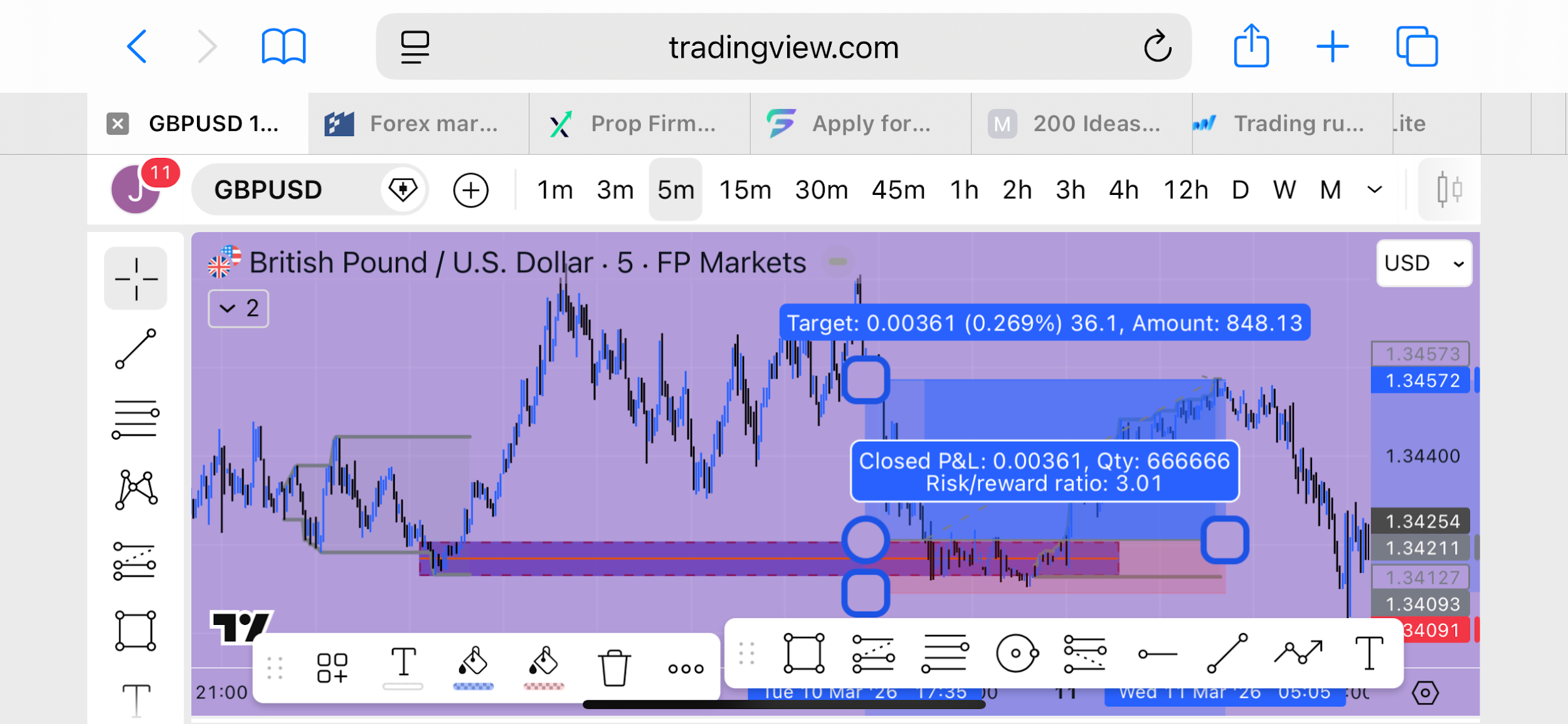
This protects your account from large drawdowns during unpredictable price swings.
3. Use Technical and Fundamental Confirmation
In 2026, markets are expected to respond strongly to economic data, central bank decisions, and geopolitical events. To avoid false moves:
- Combine technical setups (support/resistance, trendlines, moving averages) with key news events
- Avoid entering trades immediately before high-impact news unless your strategy accounts for volatility spikes
You can use forex factory to track high impact news events of the week. 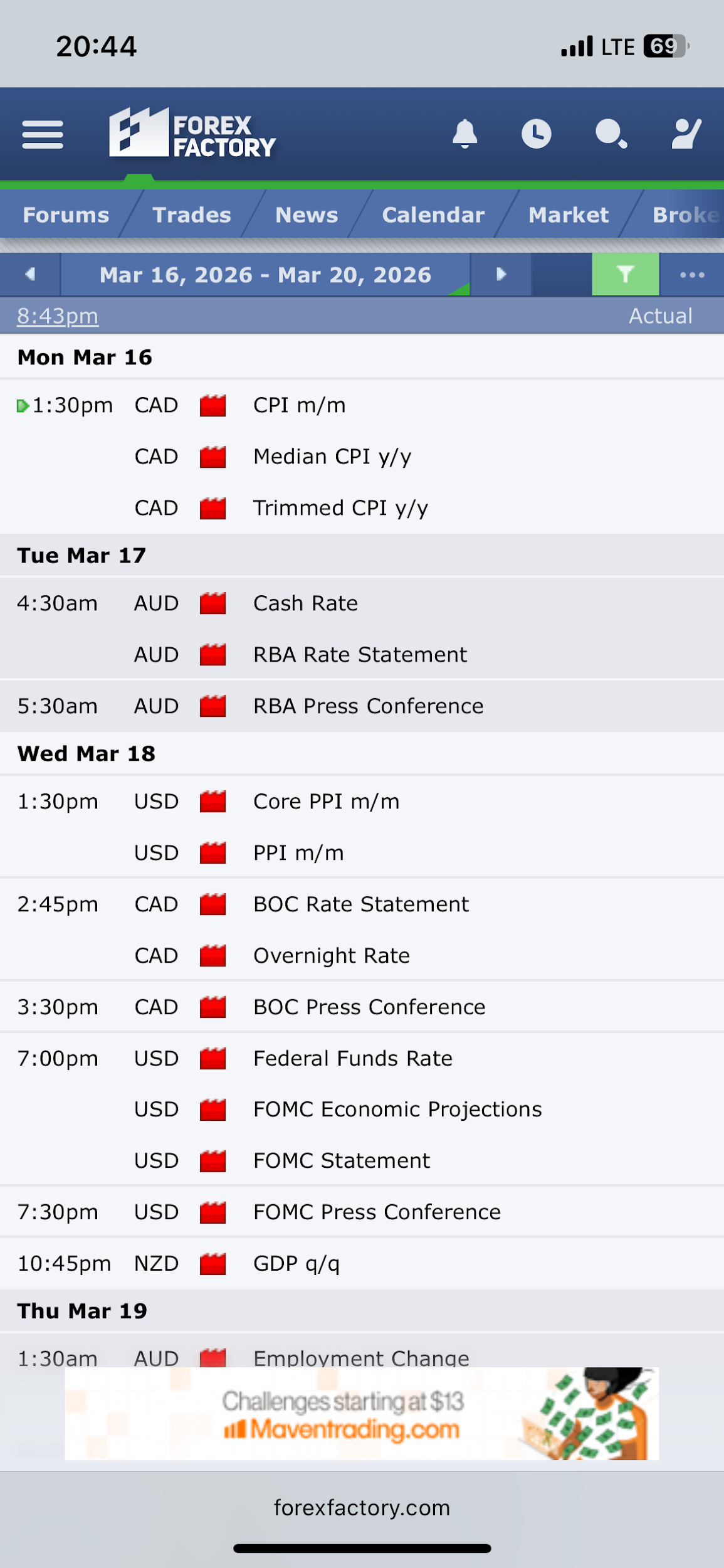
4. Be Patient and Wait for Clear Opportunities
One of the biggest mistakes traders make is forcing trades when the market doesn’t offer a true 1:3RR setup. You don’t want to be trapped in this cycle. Instead:
- Only take trades where the stop loss and take profit are logically placed
- Skip low-quality setups rather than lowering your RR ratio
Patience ensures that your risk-reward structure remains intact, which is critical for long-term profitability.
5. Automate Alerts and Risk Management
In fast-moving markets, it’s easy to miss setups or miscalculate risk. Use tools to help:
- Set alerts for price reaching potential trade zones
- Use automated stop loss and take profit orders
- Consider trading platforms that allow partial exits to lock in profit while letting the remainder run toward the 3R target
6. Track Results and Adapt
Even with a solid 1:3RR strategy, market conditions change. Keep a trading journal to track:
- Win rate
- Average risk-reward per trade
- Mistakes and deviations from your plan
Regularly reviewing your results will help you adapt the strategy to evolving market conditions in 2026.
7. Combine With Proper Mindset
Finally, remember that discipline and emotional control are essential. Stick to your plan, accept losing trades, and let the larger winners drive your profitability. We published a guide on how the dark psychology of trading affects traders and how you can break free from it.
Conclusion
The 1:3 risk-reward strategy is a powerful approach that allows traders to stay profitable even with a low win rate. By structuring trades where the potential reward is significantly larger than the risk, traders can protect their capital, manage drawdowns, and steadily work toward profit targets.
This method not only supports consistent long-term profitability but also gives traders an edge in prop firm evaluations, where disciplined risk management and consistent results are essential.
By combining careful trade selection, proper position sizing, and patience, you can apply the 1:3RR strategy effectively in the 2026 market conditions and build a trading approach that balances risk with reward for lasting success.
Helpful